

Oversoul
The Tentacled One
In the thread for my Pauper EDH deck helmed by Iridescent Drake, I mentioned that this card took me down a rabbit hole. What I have here isn't so much of a question as it is a complaint about WotC's neglect of more formalized rules management for certain awkward, older cards. I'm used to thinking of most of the 90's handwaving rules stuff as having been totally fixed and stress-tested, but then I find stuff that has evidently slipped through the cracks.
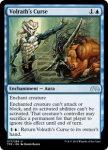
I use the version of the card from Tempest Remastered because that one includes the updated Oracle text, although the original text on the printed card is extremely similar.
For some background on why this is such an issue, here's my deck...
Commander:
1 Iridescent Drake
1 Abjure
1 Aether Tradewinds
1 Arcane Denial
1 Arcane Signet
1 Archaeomancer
1 Ashnod's Altar
1 Aura Finesse
1 Blink of an Eye
1 Boomerang
1 Brainstorm
1 Candlekeep Sage
1 Capsize
1 Careful Study
1 Cartouche of Knowledge
1 Cloud of Faeries
1 Compulsive Research
1 Contempt
1 Deep Analysis
1 Dreamscape Artist
1 Drift of Phantasms
1 Enchantment Alteration
1 False Demise
1 Fate Foretold
1 Fellwar Stone
1 Frantic Search
1 Gaseous Form
1 Ghostly Flicker
1 Gitaxian Probe
1 High Tide
1 Ideas Unbound
1 Impulse
31 Island
1 Lat-Nam's Legacy
1 Lonely Sandbar
1 Lórien Revealed
1 Merchant Scroll
1 Mind Stone
1 Mnemonic Wall
1 Muddle the Mixture
1 Mulldrifter
1 Mystic Sanctuary
1 Ornithopter of Paradise
1 Peregrine Drake
1 Ponder
1 Rousing Read
1 Run Away Together
1 Sage's Row Denizen
1 Salvager of Secrets
1 Seat of the Synod
1 Shrieking Drake
1 Shrine Steward
1 Silver Myr
1 Sky Diamond
1 Snap
1 Step Through
1 Thassa's Devourer
1 Think Twice
1 Third Path Savant
1 Thirst for Meaning
1 Tocasia's Dig Site
1 Traveler's Cloak
1 Treasure Cruise
1 Tymora's Invoker
1 Unsummon
1 Vanishing
1 Vedalken Aethermage
1 Volrath's Curse
1 Wayfarer's Bauble
1 You Find the Villains' Lair
As an uncommon creature, Iridescent Drake can be run as a commander in PDH. It cannot be run in the main deck. With only commons and a mono-blue color identity, the only really strong aura to use with Iridescent Drake is False Demise. Everything else is kind of crap. My deck is under enormous pressure to find False Demise as soon as possible. I did build it so that Iridescent Drake can squeeze some value out of other auras, but most of them just draw a card or something. Even if the deck does get this combo, all it results in is an unkillable Drake. I still need a sac outlet, and sac outlets for creatures in blue at common are virtually nonexistent, with the obvious exception of Ashnod's Altar. The three-card combo of Iridescent Drake + False Demise + Ashnod's Altar makes infinite colorless mana and provides infinite triggers for effects that care about permanents entering or leaving the battlefield. In a 100-card singleton deck full of commons, I run into the rather predictable difficulty that assembling this exact combo, even with one piece in the command zone, is not reliable.
Enter Volrath's Curse, a strange aura from Tempest. I came across this while searching through all common blue auras. Initially, I think I grabbed it for my "maybe" pile because I considered that Iridescent Drake can grab it out of my graveyard, at which point I can bounce it and recast it on an opponent's creature, leaving me free to bounce or flicker the Drake and go for some other aura later. As I refined my initial list, I hit on the idea that this card might be more useful being left on the Drake, which doesn't normally do much attacking. I could sacrifice one of my other auras regardless of my intention to attack that turn, and get it into my graveyard so that Iridescent Drake could come back for it later. Minor value, but useful tech in a list that was desperate for useful auras.
And then, in my testing, I stumbled on the interaction that sent me down this rabbit hole. Iridescent Drake + False Demise + Candlekeep Sage. Every time I kill my commander, I get to draw a card. That probably isn't Ashnod's Altar, so I want to kill my commander lots of times, if I can. And if I have Volrath's Curse on one of my other creatures, I can sacrifice Iridescent Drake to Volrath's Curse, with False Demise bringing back Iridescent Drake, Iridescent Drake bringing back False Demise, and Candlekeep Sage drawing me a card. The question, then, is how many times can I do this?
The sacrifice isn't an activated ability. It isn't a triggered ability. It's a "special effect" and the rules text says, "That creature’s controller may sacrifice a permanent of their choice for that player to ignore this effect until end of turn." The Comprehensive Rules don't have much information that clarifies the nature of this "ignore" language. What is the player ignoring until end of turn? And since other players don't ignore the effect, how does that even function? The rules don't really define this. It's being handwaved. And while this is ordinarily niche, the actual ramifications of "ignorance" and "this effect" are extremely important in the context of this deck.
Google searching revealed, well, not much. The earliest instance of this question coming up that I could find was from back in 1998, and the most recent was in 2023, and at no point were any of the people involved in any of these discussions the Rules Manager. Some of them were judges. Some of the judges disagreed with each other. For every judge answer that said something like, "Since these effects are ongoing, the ability to pay them doesn’t go away and so you can use Volrath’s Curse as a free sacrifice outlet if you really want to" there was another that said something like, "Once you've sacrificed a creature to ignore the ability, you ignore the whole ability -- including the part that let you sacrifice a creature."
The card itself has apparently never had any relevant official rulings, but some discussions cited a ruling on Damping Engine, which as similar wording.
Volrath's Curse is over 28 years old. Even if WotC can't be bothered to rewrite a section of the Comprehensive Rules to account for "ignore this effect" specifications, they could easily have added a ruling to the card itself. Come on.
Part of me thinks that it's just wishful thinking on my part that some random Tempest common secretly lets me sacrifice as many permanents as I want to, whenever I want to, without using the stack. It sounds absurd when I put it that way, although really the only decks I can even think of that would take advantage of it would be this Pauper EDH deck and maybe a Barren Glory deck or something. But yeah, I'd just err on the side of that and assume it's once per turn, except the most recent judge commentary I can find on it says otherwise.
I use the version of the card from Tempest Remastered because that one includes the updated Oracle text, although the original text on the printed card is extremely similar.
For some background on why this is such an issue, here's my deck...
The Drake Equation [Pauper EDH]
Iridescent Drake is one of my favorite cards. So when I got into Pauper EDH, I knew I had to build a deck helmed by this thing. Mono-blue auras don't pack much of a punch at common, but the core gameplan here is to set up Iridescent Drake + False Demise + Ashnod's Altar and sink that infinite...
www.casualplayers.org
Commander:
1 Iridescent Drake
1 Abjure
1 Aether Tradewinds
1 Arcane Denial
1 Arcane Signet
1 Archaeomancer
1 Ashnod's Altar
1 Aura Finesse
1 Blink of an Eye
1 Boomerang
1 Brainstorm
1 Candlekeep Sage
1 Capsize
1 Careful Study
1 Cartouche of Knowledge
1 Cloud of Faeries
1 Compulsive Research
1 Contempt
1 Deep Analysis
1 Dreamscape Artist
1 Drift of Phantasms
1 Enchantment Alteration
1 False Demise
1 Fate Foretold
1 Fellwar Stone
1 Frantic Search
1 Gaseous Form
1 Ghostly Flicker
1 Gitaxian Probe
1 High Tide
1 Ideas Unbound
1 Impulse
31 Island
1 Lat-Nam's Legacy
1 Lonely Sandbar
1 Lórien Revealed
1 Merchant Scroll
1 Mind Stone
1 Mnemonic Wall
1 Muddle the Mixture
1 Mulldrifter
1 Mystic Sanctuary
1 Ornithopter of Paradise
1 Peregrine Drake
1 Ponder
1 Rousing Read
1 Run Away Together
1 Sage's Row Denizen
1 Salvager of Secrets
1 Seat of the Synod
1 Shrieking Drake
1 Shrine Steward
1 Silver Myr
1 Sky Diamond
1 Snap
1 Step Through
1 Thassa's Devourer
1 Think Twice
1 Third Path Savant
1 Thirst for Meaning
1 Tocasia's Dig Site
1 Traveler's Cloak
1 Treasure Cruise
1 Tymora's Invoker
1 Unsummon
1 Vanishing
1 Vedalken Aethermage
1 Volrath's Curse
1 Wayfarer's Bauble
1 You Find the Villains' Lair
As an uncommon creature, Iridescent Drake can be run as a commander in PDH. It cannot be run in the main deck. With only commons and a mono-blue color identity, the only really strong aura to use with Iridescent Drake is False Demise. Everything else is kind of crap. My deck is under enormous pressure to find False Demise as soon as possible. I did build it so that Iridescent Drake can squeeze some value out of other auras, but most of them just draw a card or something. Even if the deck does get this combo, all it results in is an unkillable Drake. I still need a sac outlet, and sac outlets for creatures in blue at common are virtually nonexistent, with the obvious exception of Ashnod's Altar. The three-card combo of Iridescent Drake + False Demise + Ashnod's Altar makes infinite colorless mana and provides infinite triggers for effects that care about permanents entering or leaving the battlefield. In a 100-card singleton deck full of commons, I run into the rather predictable difficulty that assembling this exact combo, even with one piece in the command zone, is not reliable.
Enter Volrath's Curse, a strange aura from Tempest. I came across this while searching through all common blue auras. Initially, I think I grabbed it for my "maybe" pile because I considered that Iridescent Drake can grab it out of my graveyard, at which point I can bounce it and recast it on an opponent's creature, leaving me free to bounce or flicker the Drake and go for some other aura later. As I refined my initial list, I hit on the idea that this card might be more useful being left on the Drake, which doesn't normally do much attacking. I could sacrifice one of my other auras regardless of my intention to attack that turn, and get it into my graveyard so that Iridescent Drake could come back for it later. Minor value, but useful tech in a list that was desperate for useful auras.
And then, in my testing, I stumbled on the interaction that sent me down this rabbit hole. Iridescent Drake + False Demise + Candlekeep Sage. Every time I kill my commander, I get to draw a card. That probably isn't Ashnod's Altar, so I want to kill my commander lots of times, if I can. And if I have Volrath's Curse on one of my other creatures, I can sacrifice Iridescent Drake to Volrath's Curse, with False Demise bringing back Iridescent Drake, Iridescent Drake bringing back False Demise, and Candlekeep Sage drawing me a card. The question, then, is how many times can I do this?
The sacrifice isn't an activated ability. It isn't a triggered ability. It's a "special effect" and the rules text says, "That creature’s controller may sacrifice a permanent of their choice for that player to ignore this effect until end of turn." The Comprehensive Rules don't have much information that clarifies the nature of this "ignore" language. What is the player ignoring until end of turn? And since other players don't ignore the effect, how does that even function? The rules don't really define this. It's being handwaved. And while this is ordinarily niche, the actual ramifications of "ignorance" and "this effect" are extremely important in the context of this deck.
- If Volrath's Curse allows me to sacrifice a permanent as many times as I want to within the same turn, then it's a second free sac outlet for the Drake/Demise combo. Unlike Ashnod's Altar, it doesn't make any mana. But I can mill my opponent's out with Sage's Row Denizen or Thassa's Devourer. I can draw through my deck with Candlekeep Sage. This potentially turns a lot of games in which I would have won if I could have found Ashnod's Altar into ones that I do indeed win.
- If Volrath's Curse only lets me sacrifice a permanent once per turn, then I can still technically activate Volrath's Curse for 1U, recast it, and sacrifice a permanent again, as the Volrath's Curse entered as a new object. And I can sacrifice the Drake again once on each of my opponents' turns. If I do have Candlekeep Sage on the table, that's not the worst draw engine ever.
Google searching revealed, well, not much. The earliest instance of this question coming up that I could find was from back in 1998, and the most recent was in 2023, and at no point were any of the people involved in any of these discussions the Rules Manager. Some of them were judges. Some of the judges disagreed with each other. For every judge answer that said something like, "Since these effects are ongoing, the ability to pay them doesn’t go away and so you can use Volrath’s Curse as a free sacrifice outlet if you really want to" there was another that said something like, "Once you've sacrificed a creature to ignore the ability, you ignore the whole ability -- including the part that let you sacrifice a creature."
The card itself has apparently never had any relevant official rulings, but some discussions cited a ruling on Damping Engine, which as similar wording.
The most recent Ask a Judge question I could find goes the other way, and in the comment section, one user brings up this ruling on Damping Engine, then notes, "although that’s an admittedly old ruling."A player can only sacrifice a permanent to end this effect if they have more permanents than any other player, and they haven’t already sacrificed a permanent to end the effect this turn. The ability to sacrifice a creature is granted by the same effect that is being ended. (2008-08-01)
Volrath's Curse is over 28 years old. Even if WotC can't be bothered to rewrite a section of the Comprehensive Rules to account for "ignore this effect" specifications, they could easily have added a ruling to the card itself. Come on.
Part of me thinks that it's just wishful thinking on my part that some random Tempest common secretly lets me sacrifice as many permanents as I want to, whenever I want to, without using the stack. It sounds absurd when I put it that way, although really the only decks I can even think of that would take advantage of it would be this Pauper EDH deck and maybe a Barren Glory deck or something. But yeah, I'd just err on the side of that and assume it's once per turn, except the most recent judge commentary I can find on it says otherwise.